


InnoCal Blog
Information about keeping your instruments running accurately
Show of Force: Keeping the Tension in Torque and Force Equipment
In the electronics, plastics, construction, and chemical industries—or any in which push/pull measurements are required—a digital or mechanical force gauge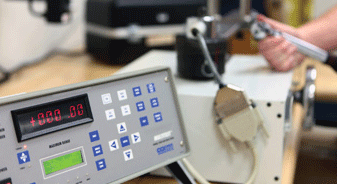 helps determine a product’s strength.
These tools are used by manufacturers and material testers particularly in new product development and design. Textiles manufacturers may test the strength of cloth or packagers may determine the reliability and stability of their containers with these devices. The products they are manufacturing need to be able to stand up to repeated use and meet the requirements of their intended purposes.
With critical applications like these, it is essential that compression and tension measurements are accurate. Maintaining this accuracy requires regular calibration. This ensures that the products in development are produced at a high, consistent level of quality.
From force gauges to torque wrenches to torque testers to durometers, InnoCal has the calibration standards to keep your torque and force equipment operating correctly.
InnoCal's environmentally-controlled laboratory has been evaluated by A2LA and confirmed for technical competency.

Comments
-
Monday, 13 April 2026
Cybervibers
Great insights on the importance of accurate calibration in maintaining product quality and reliability. Businesses in technical industries can also boost their visibility and reach with the help of local seo companies houston to connect with the right audience.
-
Sunday, 05 April 2026
All Exam Help
This is an informative and educational post that highlights the importance of force measurement tools in various industries and the role of calibration in maintaining accuracy and product quality. It helps readers understand real-world applications of science and engineering concepts. While some students may look for shortcuts like do my exam for me content like this encourages practical learning, technical awareness, and a deeper understanding of industry standards.
-
Sunday, 05 April 2026
All Exam Help
This is an informative and educational post that highlights the importance of force measurement tools in various industries and the role of calibration in maintaining accuracy and product quality. It helps readers understand real-world applications of science and engineering concepts. While some students may look for shortcuts like do my exam for me content like this encourages practical learning, technical awareness, and a deeper understanding of industry standards.
-
Sunday, 05 April 2026
All Exam Help
This is an informative and educational post that highlights the importance of force measurement tools in various industries and the role of calibration in maintaining accuracy and product quality. It helps readers understand real-world applications of science and engineering concepts. While some students may look for shortcuts like do my exam for me content like this encourages practical learning, technical awareness, and a deeper understanding of industry standards.
-
Sunday, 05 April 2026
All Exam Help
This is an informative and educational post that highlights the importance of force measurement tools in various industries and the role of calibration in maintaining accuracy and product quality. It helps readers understand real-world applications of science and engineering concepts. While some students may look for shortcuts like do my exam for me content like this encourages practical learning, technical awareness, and a deeper understanding of industry standards.
-
Sunday, 05 April 2026
All Exam Help
This is an informative and educational post that highlights the importance of force measurement tools in various industries and the role of calibration in maintaining accuracy and product quality. It helps readers understand real-world applications of science and engineering concepts. While some students may look for shortcuts like do my exam for me content like this encourages practical learning, technical awareness, and a deeper understanding of industry standards.
-
Sunday, 05 April 2026
All Exam Help
This is an informative and educational post that highlights the importance of force measurement tools in various industries and the role of calibration in maintaining accuracy and product quality. It helps readers understand real-world applications of science and engineering concepts. While some students may look for shortcuts like do my exam for me content like this encourages practical learning, technical awareness, and a deeper understanding of industry standards.
-
Tuesday, 18 November 2025
Beyond the Bedside: The Nurse as Scientist, Leader, and Innovator ?
Beyond the Bedside: The Nurse as Scientist, Leader, and Innovator ?
For centuries, the image of the nurse has been inextricably linked to the bedside—the gentle hand soothing a fevered brow, the tireless watch through the night. While direct patient care remains the sacred core of the profession, the 21st-century nurse has evolved far beyond this singular stereotype. Today, nursing is a vast, expansive discipline, recognizing the nurse not just as a caregiver, but as a sophisticated scientist, NURS FPX 4065 Assessment 6 a proactive leader, and a crucial healthcare innovator.
This evolution reflects a deeper understanding of health itself, moving from a focus solely on illness treatment to a holistic system dedicated to prevention, chronic disease management, and system-wide improvements. The modern nurse stands at the intersection of data, policy, and practice, driving change in ways that are often unseen but profoundly impactful.
The Nurse as Clinical Scientist: Evidence-Based Practice
The foundation of modern nursing is evidence-based practice (EBP). No longer is care based solely on tradition or routine; every intervention is ideally rooted in the best available scientific evidence. This transformation elevates the nurse to a clinical scientist who must:
Critically Appraise Research: Read, understand, and evaluate complex clinical studies and trials.
Integrate Findings: Synthesize research evidence with their own clinical expertise and the patient’s values and preferences.
Generate New Knowledge: Through advanced practice and doctoral programs (DNP or PhD), nurses conduct research that directly influences patient outcomes and healthcare delivery models.
For instance, a nurse specializing in wound care might develop and implement new protocols for pressure ulcer prevention based on meta-analyses, dramatically reducing hospital-acquired injuries. This role shifts the nurse from a receiver of orders to a generator of clinical wisdom. They are actively involved in the scientific process, closing the gap between research discovery and actual patient application.
Leading from the Front: Nurses in Administration and Policy
The vast experience nurses accumulate at the bedside provides them with an unparalleled perspective on the strengths, weaknesses, and inefficiencies of the healthcare system. This ground-level insight makes them natural and necessary leaders in administration, NURS FPX 4905 Assessment 1 policy, and advocacy.
Hospital and System Administration: Chief Nursing Officers (CNOs) and nurse managers hold key executive positions, managing budgets, personnel, and quality control for entire health systems. Their decisions directly impact everything from staffing ratios to technology procurement.
Healthcare Policy and Legislation: Nurses are increasingly taking roles in government, informing legislators on public health issues, advocating for vulnerable populations, and shaping healthcare reform. They ensure policies are practical, patient-centered, and clinically sound.
Interprofessional Collaboration: Nurses lead care coordination teams, acting as the nexus between physicians, therapists, social workers, and pharmacists. They possess the communication skills and holistic view necessary to ensure smooth, integrated transitions for the patient.
When a nurse speaks, they are speaking from a deep, intimate understanding of the patient journey—a perspective that is essential for effective, compassionate governance.
The Entrepreneurial Nurse: Innovation and Public Health
Beyond the traditional roles, many nurses are now embracing entrepreneurship and innovation, utilizing their clinical expertise to solve systemic problems and address community health needs.
Tech and Informatics: Nurse informaticists bridge the gap between clinical practice and technology, designing user-friendly Electronic Health Records (EHRs) and developing digital health tools that improve communication and patient safety.
Community Health Innovation: Advanced Practice Registered Nurses (APRNs), particularly Nurse Practitioners (NPs), are crucial in extending healthcare access. They often establish independent clinics in underserved rural or urban areas, providing primary and preventative care and acting as the primary healthcare provider for entire communities.
Global Health: Nurses are pivotal in global health initiatives, NURS FPX 4905 Assessment 2 specializing in disaster relief, vaccine distribution, and establishing foundational public health programs in resource-limited settings.
In this capacity, the nurse is a disruptor—challenging old models and applying clinical acumen to create sustainable, accessible solutions that address the broad determinants of health, not just episodic illness.
The Central Tenet: Human-Centered Care
Regardless of the specialization—whether a nurse is conducting a clinical trial, lobbying Congress, or managing a critical care unit—the core ethos remains an unwavering commitment to human-centered care. The nurse's education emphasizes ethics, empathy, and advocacy, ensuring that even in the most technologically advanced or bureaucratic settings, the individual patient's voice and dignity are paramount.
The expansion of the nursing role is a testament to the profession's adaptability and intellectual strength. It is a profession that demands continuous learning and a relentless pursuit of excellence, providing unparalleled opportunities to truly make a difference in individual lives and reshape the trajectory of public health.
The bedside will always need skilled, compassionate nurses, but the boardrooms, research labs, NURS FPX 4905 Assessment 5 and halls of government need their unique vision just as urgently. The nurse of today is not just a caregiver; they are an essential architect of the future of health.
-
Tuesday, 18 November 2025
The Enduring Heartbeat: Why Nursing Remains the World's Most Vital Profession
The Enduring Heartbeat: Why Nursing Remains the World's Most Vital Profession ❤️
The healthcare landscape is a complex, ever-shifting terrain of technology, policy, and human drama. At its very core, however, stands the nurse. Often the first face a patient sees and the last hand they hold, the nurse is the enduring heartbeat of the system—the consistent source of comfort, expertise, and advocacy. In a world increasingly driven by specialization and automation, the foundational, holistic nature of nursing not only persists but grows more critical every day. It is a profession demanding an impossible balance: the rigorous precision of a scientist, the relentless compassion of a caregiver, Take my online nursing class for me the resilience of a warrior, and the patience of a teacher.
The Science and the Art: Blending Clinical Excellence with Human Connection
Nursing is fundamentally an applied science. Modern practice requires a deep, current understanding of pharmacology, pathophysiology, critical care procedures, and evidence-based practice guidelines. A nurse constantly performs complex assessments, interprets vital signs, manages intricate equipment, and administers life-saving medications. Their clinical eye is often the most critical early warning system in a hospital setting; they detect subtle changes in a patient's condition that can mean the difference between recovery and crisis. This demands continuous learning and intellectual discipline.
However, the element that truly defines nursing is the art of care. Unlike any other role, nurses are present for the entire spectrum of the human experience—from the first breath of a newborn to the quiet dignity of a final farewell. This proximity requires emotional intelligence, skilled communication, and an unwavering commitment to the patient's dignity. A doctor may treat the disease, but a nurse cares for the person. This involves:
Therapeutic Presence: Knowing when to talk, when to listen, and when silence is the most powerful intervention.
Patient Education: Translating complex medical jargon into understandable instructions, empowering patients and families to manage their own health.
Advocacy: Standing up for a patient’s wishes, ensuring their voice is heard in a high-pressure, multi-disciplinary team environment.
This blend of high-tech skill and high-touch compassion is what makes a nurse irreplaceable. It’s the skillful placement of an IV line combined with the gentle hand holding that calms a terrified patient.
The Unseen Burden: Resilience and Burnout
The emotional and physical demands on nurses are immense. The work is often performed under duress—staff shortages, extended shifts, and the constant exposure to trauma, suffering, and death. Nurses are frontline responders to global crises, pay someone to do your online class pandemics, and daily emergencies. This relentless environment takes a toll, leading to high rates of burnout and compassion fatigue.
The concept of resilience in nursing is not simply about 'toughing it out'; it’s about creating sustainable practice models. Addressing the current nursing crisis requires systemic changes, not just individual coping strategies. Healthcare institutions must prioritize:
Safe Staffing Ratios: Ensuring nurses are not overburdened, which compromises both patient safety and nurse well-being.
Mental Health Support: Providing accessible and confidential counseling and peer-support programs.
Workplace Violence Prevention: Protecting nurses from the increasing threat of physical and verbal abuse.
Recognizing the humanity and limits of the professional caregiver is paramount to sustaining the profession. Nurses give their all, and the system must, in turn, protect the well-being of its protectors.
Nursing in the Digital Age: Adapting to the Future
The 21st century has brought rapid technological integration into healthcare. Electronic Health Records (EHRs), telehealth, remote monitoring, and artificial intelligence (AI) are reshaping how care is delivered. Far from replacing the nurse, technology is creating a more sophisticated and demanding role for them.
Data Interpretation: Nurses are now required to synthesize data from multiple sources—wearable tech, monitoring systems, and EHRs—to create a complete clinical picture.
Telehealth Expertise: They must master the art of virtual assessment and communication, providing care and education to patients remotely.
Technology Integration: They are the critical link between the technology and the patient, ensuring that devices are used correctly and that the human element of care is not lost amidst the screens and alerts.
The future of nursing is not less hands-on; it is simply more data-informed. Technology frees up the nurse from some clerical tasks, allowing them to dedicate more focused time to complex care, critical thinking, and, most importantly, human connection—the one thing technology can never replicate.
The Call to Action: Supporting the Nursing Profession
As we look ahead, the global demand for skilled nurses is escalating dramatically due to aging populations, Importance of report writing in nursing the rise of chronic diseases, and the retirement of experienced nurses. This is not just a healthcare problem; it is a societal challenge.
To ensure the vitality of the profession, we must:
Invest in Education: Support nursing schools and faculty to train the next generation with advanced skills and ethical grounding.
Elevate the Role: Recognize and compensate nurses as the highly skilled, independent critical thinkers they are, fostering career paths in specialized areas like informatics, advanced practice (NPs, CNSs), and research.
Encourage Male Diversity: Actively recruit men into the profession to better reflect patient populations and bring diverse perspectives to care teams.
The nurse's role is not static; it is a dynamic, evolving tapestry of responsibility that underpins every aspect of health. It is a commitment that requires intellectual rigor, emotional depth, and moral courage. The dedication of a nurse, whether in a high-stakes trauma bay, a quiet hospice room, or a community clinic, is the essential element that truly makes a health care system function.
We owe the world's nurses more than just applause during a crisis; online class taker we owe them systemic support, respect, and the resources they need to continue being the enduring heartbeat of humanity's health.
What can you do?
If you know a nurse, thank them. If you are a leader in healthcare, advocate for better staffing. If you are a potential student, consider the profound and noble calling of this vital profession. The world needs your heart and your hands -
Tuesday, 18 November 2025
The Enduring Heartbeat: Why Nursing Remains the World's Most Vital Profession ❤️
The Enduring Heartbeat: Why Nursing Remains the World's Most Vital Profession ❤️
The healthcare landscape is a complex, ever-shifting terrain of technology, policy, and human drama. At its very core, however, stands the nurse. Often the first face a patient sees and the last hand they hold, the nurse is the enduring heartbeat of the system—the consistent source of comfort, expertise, and advocacy. In a world increasingly driven by specialization and automation, the foundational, holistic nature of nursing not only persists but grows more critical every day. It is a profession demanding an impossible balance: the rigorous precision of a scientist, the relentless compassion of a caregiver, Take my online nursing class for me the resilience of a warrior, and the patience of a teacher.
The Science and the Art: Blending Clinical Excellence with Human Connection
Nursing is fundamentally an applied science. Modern practice requires a deep, current understanding of pharmacology, pathophysiology, critical care procedures, and evidence-based practice guidelines. A nurse constantly performs complex assessments, interprets vital signs, manages intricate equipment, and administers life-saving medications. Their clinical eye is often the most critical early warning system in a hospital setting; they detect subtle changes in a patient's condition that can mean the difference between recovery and crisis. This demands continuous learning and intellectual discipline.
However, the element that truly defines nursing is the art of care. Unlike any other role, nurses are present for the entire spectrum of the human experience—from the first breath of a newborn to the quiet dignity of a final farewell. This proximity requires emotional intelligence, skilled communication, and an unwavering commitment to the patient's dignity. A doctor may treat the disease, but a nurse cares for the person. This involves:
Therapeutic Presence: Knowing when to talk, when to listen, and when silence is the most powerful intervention.
Patient Education: Translating complex medical jargon into understandable instructions, empowering patients and families to manage their own health.
Advocacy: Standing up for a patient’s wishes, ensuring their voice is heard in a high-pressure, multi-disciplinary team environment.
This blend of high-tech skill and high-touch compassion is what makes a nurse irreplaceable. It’s the skillful placement of an IV line combined with the gentle hand holding that calms a terrified patient.
The Unseen Burden: Resilience and Burnout
The emotional and physical demands on nurses are immense. The work is often performed under duress—staff shortages, extended shifts, and the constant exposure to trauma, suffering, and death. Nurses are frontline responders to global crises, pay someone to do your online class pandemics, and daily emergencies. This relentless environment takes a toll, leading to high rates of burnout and compassion fatigue.
The concept of resilience in nursing is not simply about 'toughing it out'; it’s about creating sustainable practice models. Addressing the current nursing crisis requires systemic changes, not just individual coping strategies. Healthcare institutions must prioritize:
Safe Staffing Ratios: Ensuring nurses are not overburdened, which compromises both patient safety and nurse well-being.
Mental Health Support: Providing accessible and confidential counseling and peer-support programs.
Workplace Violence Prevention: Protecting nurses from the increasing threat of physical and verbal abuse.
Recognizing the humanity and limits of the professional caregiver is paramount to sustaining the profession. Nurses give their all, and the system must, in turn, protect the well-being of its protectors.
Nursing in the Digital Age: Adapting to the Future
The 21st century has brought rapid technological integration into healthcare. Electronic Health Records (EHRs), telehealth, remote monitoring, and artificial intelligence (AI) are reshaping how care is delivered. Far from replacing the nurse, technology is creating a more sophisticated and demanding role for them.
Data Interpretation: Nurses are now required to synthesize data from multiple sources—wearable tech, monitoring systems, and EHRs—to create a complete clinical picture.
Telehealth Expertise: They must master the art of virtual assessment and communication, providing care and education to patients remotely.
Technology Integration: They are the critical link between the technology and the patient, ensuring that devices are used correctly and that the human element of care is not lost amidst the screens and alerts.
The future of nursing is not less hands-on; it is simply more data-informed. Technology frees up the nurse from some clerical tasks, allowing them to dedicate more focused time to complex care, critical thinking, and, most importantly, human connection—the one thing technology can never replicate.
The Call to Action: Supporting the Nursing Profession
As we look ahead, the global demand for skilled nurses is escalating dramatically due to aging populations, Importance of report writing in nursing the rise of chronic diseases, and the retirement of experienced nurses. This is not just a healthcare problem; it is a societal challenge.
To ensure the vitality of the profession, we must:
Invest in Education: Support nursing schools and faculty to train the next generation with advanced skills and ethical grounding.
Elevate the Role: Recognize and compensate nurses as the highly skilled, independent critical thinkers they are, fostering career paths in specialized areas like informatics, advanced practice (NPs, CNSs), and research.
Encourage Male Diversity: Actively recruit men into the profession to better reflect patient populations and bring diverse perspectives to care teams.
The nurse's role is not static; it is a dynamic, evolving tapestry of responsibility that underpins every aspect of health. It is a commitment that requires intellectual rigor, emotional depth, and moral courage. The dedication of a nurse, whether in a high-stakes trauma bay, a quiet hospice room, or a community clinic, is the essential element that truly makes a health care system function.
We owe the world's nurses more than just applause during a crisis; online class taker we owe them systemic support, respect, and the resources they need to continue being the enduring heartbeat of humanity's health.
What can you do?
If you know a nurse, thank them. If you are a leader in healthcare, advocate for better staffing. If you are a potential student, consider the profound and noble calling of this vital profession. The world needs your heart and your hands -
Tuesday, 18 November 2025
The Enduring Heartbeat: Why Nursing Remains the World's Most Vital Profession ❤️
The Enduring Heartbeat: Why Nursing Remains the World's Most Vital Profession ❤️
The healthcare landscape is a complex, ever-shifting terrain of technology, policy, and human drama. At its very core, however, stands the nurse. Often the first face a patient sees and the last hand they hold, the nurse is the enduring heartbeat of the system—the consistent source of comfort, expertise, and advocacy. In a world increasingly driven by specialization and automation, the foundational, holistic nature of nursing not only persists but grows more critical every day. It is a profession demanding an impossible balance: the rigorous precision of a scientist, the relentless compassion of a caregiver, Take my online nursing class for me the resilience of a warrior, and the patience of a teacher.
The Science and the Art: Blending Clinical Excellence with Human Connection
Nursing is fundamentally an applied science. Modern practice requires a deep, current understanding of pharmacology, pathophysiology, critical care procedures, and evidence-based practice guidelines. A nurse constantly performs complex assessments, interprets vital signs, manages intricate equipment, and administers life-saving medications. Their clinical eye is often the most critical early warning system in a hospital setting; they detect subtle changes in a patient's condition that can mean the difference between recovery and crisis. This demands continuous learning and intellectual discipline.
However, the element that truly defines nursing is the art of care. Unlike any other role, nurses are present for the entire spectrum of the human experience—from the first breath of a newborn to the quiet dignity of a final farewell. This proximity requires emotional intelligence, skilled communication, and an unwavering commitment to the patient's dignity. A doctor may treat the disease, but a nurse cares for the person. This involves:
Therapeutic Presence: Knowing when to talk, when to listen, and when silence is the most powerful intervention.
Patient Education: Translating complex medical jargon into understandable instructions, empowering patients and families to manage their own health.
Advocacy: Standing up for a patient’s wishes, ensuring their voice is heard in a high-pressure, multi-disciplinary team environment.
This blend of high-tech skill and high-touch compassion is what makes a nurse irreplaceable. It’s the skillful placement of an IV line combined with the gentle hand holding that calms a terrified patient.
The Unseen Burden: Resilience and Burnout
The emotional and physical demands on nurses are immense. The work is often performed under duress—staff shortages, extended shifts, and the constant exposure to trauma, suffering, and death. Nurses are frontline responders to global crises, pay someone to do your online class pandemics, and daily emergencies. This relentless environment takes a toll, leading to high rates of burnout and compassion fatigue.
The concept of resilience in nursing is not simply about 'toughing it out'; it’s about creating sustainable practice models. Addressing the current nursing crisis requires systemic changes, not just individual coping strategies. Healthcare institutions must prioritize:
Safe Staffing Ratios: Ensuring nurses are not overburdened, which compromises both patient safety and nurse well-being.
Mental Health Support: Providing accessible and confidential counseling and peer-support programs.
Workplace Violence Prevention: Protecting nurses from the increasing threat of physical and verbal abuse.
Recognizing the humanity and limits of the professional caregiver is paramount to sustaining the profession. Nurses give their all, and the system must, in turn, protect the well-being of its protectors.
Nursing in the Digital Age: Adapting to the Future
The 21st century has brought rapid technological integration into healthcare. Electronic Health Records (EHRs), telehealth, remote monitoring, and artificial intelligence (AI) are reshaping how care is delivered. Far from replacing the nurse, technology is creating a more sophisticated and demanding role for them.
Data Interpretation: Nurses are now required to synthesize data from multiple sources—wearable tech, monitoring systems, and EHRs—to create a complete clinical picture.
Telehealth Expertise: They must master the art of virtual assessment and communication, providing care and education to patients remotely.
Technology Integration: They are the critical link between the technology and the patient, ensuring that devices are used correctly and that the human element of care is not lost amidst the screens and alerts.
The future of nursing is not less hands-on; it is simply more data-informed. Technology frees up the nurse from some clerical tasks, allowing them to dedicate more focused time to complex care, critical thinking, and, most importantly, human connection—the one thing technology can never replicate.
The Call to Action: Supporting the Nursing Profession
As we look ahead, the global demand for skilled nurses is escalating dramatically due to aging populations, Importance of report writing in nursing the rise of chronic diseases, and the retirement of experienced nurses. This is not just a healthcare problem; it is a societal challenge.
To ensure the vitality of the profession, we must:
Invest in Education: Support nursing schools and faculty to train the next generation with advanced skills and ethical grounding.
Elevate the Role: Recognize and compensate nurses as the highly skilled, independent critical thinkers they are, fostering career paths in specialized areas like informatics, advanced practice (NPs, CNSs), and research.
Encourage Male Diversity: Actively recruit men into the profession to better reflect patient populations and bring diverse perspectives to care teams.
The nurse's role is not static; it is a dynamic, evolving tapestry of responsibility that underpins every aspect of health. It is a commitment that requires intellectual rigor, emotional depth, and moral courage. The dedication of a nurse, whether in a high-stakes trauma bay, a quiet hospice room, or a community clinic, is the essential element that truly makes a health care system function.
We owe the world's nurses more than just applause during a crisis; online class taker we owe them systemic support, respect, and the resources they need to continue being the enduring heartbeat of humanity's health.
What can you do?
If you know a nurse, thank them. If you are a leader in healthcare, advocate for better staffing. If you are a potential student, consider the profound and noble calling of this vital profession. The world needs your heart and your hands -
Tuesday, 11 November 2025
nursing
NURS FPX 6020 Assessment: Developing Ethical Leadership and Decision-Making in Nursing
The NURS FPX 6020 Assessment is an essential component of the Master of Science in Nursing (MSN) program at Capella University. This course, titled Ethics in Health Care NURS FPX 6020 Assessment 3
, challenges nursing professionals to analyze, evaluate, and respond to ethical dilemmas in real-world healthcare environments. It’s designed to strengthen moral reasoning, reinforce ethical integrity, and prepare nurses to take on leadership roles that demand fairness, accountability, and compassion.
In an age of technological innovation and cultural diversity, nurses face ethical challenges that influence patient care and professional behavior. The NURS FPX 6020 Assessment equips students with the tools needed to think critically, act ethically, and uphold the highest standards of nursing practice.
Purpose of the NURS FPX 6020 Assessment
The purpose of this assessment is to build nurses’ ethical competence by integrating moral reasoning, legal awareness, and professional standards into nursing practice. The NURS FPX 6020 Assessment guides learners to:
Understand ethical theories and how they apply to healthcare.
Evaluate real-world ethical dilemmas from multiple perspectives.
Develop solutions based on ethical principles and evidence-based reasoning.
Reflect on personal and professional values that influence moral decision-making.
This course encourages a deep exploration of the nurse’s role in maintaining patient dignity, safety, and justice, especially in ethically complex clinical settings.
Major Components of NURS FPX 6020 Assessment
The NURS FPX 6020 Assessment focuses on ethical awareness, analysis, and reflection. Each component contributes to the student’s ability to resolve moral conflicts professionally and compassionately.
1. Choosing an Ethical Issue
Students begin by selecting an ethical issue that reflects a real or hypothetical healthcare situation. Common examples include:
End-of-life decisions and patient autonomy.
Maintaining confidentiality in the digital era.
Cultural sensitivity in treatment choices.
Allocation of limited healthcare resources.
Managing nurse burnout and moral distress.
Choosing a meaningful topic ensures authentic engagement and allows students to connect theory with practice. -
Tuesday, 11 November 2025
nursing
NURS FPX 6020 Assessment: Navigating Ethics and Moral Reasoning in Nursing Practice
The NURS FPX 6020 Assessment is a core part of the Capella University MSN curriculum that emphasizes the importance of ethical decision-making in nursing. This assessment prepares nurses to manage real-world moral challenges, integrate professional values, and uphold the ethical standards of healthcare practice. As the healthcare environment continues to evolve with technological advancements and diverse patient needs NURS FPX 6020 Assessment 3, ethical competence has become more vital than ever.
Understanding the Purpose of NURS FPX 6020 Assessment
The NURS FPX 6020 – Ethics in Health Care course focuses on developing nurses’ ability to think critically and act ethically. The purpose of this assessment is to teach nurses how to apply ethical principles, frameworks NURS FPX 6026 Assessment 4, and reasoning to clinical situations where moral conflicts often arise.
The assessment helps learners to:
Recognize and evaluate ethical dilemmas in healthcare.
Integrate professional and legal standards in ethical decision-making.
Reflect on personal values that influence professional conduct.
Develop leadership skills in ethical reasoning.
It equips nursing professionals to address moral challenges with confidence and ensure patient safety and dignity through ethical care.
Key Components of NURS FPX 6020 Assessment
This assessment involves comprehensive analysis and reflection on ethical situations that commonly occur in clinical practice. It requires the application of ethical theories NURS FPX 6116 Assessment 1, legal frameworks, and personal reflection.
1. Identification of an Ethical Dilemma
The first step involves choosing a relevant ethical dilemma from nursing or healthcare practice. Common examples include:
End-of-life decision-making.
Protecting patient confidentiality in digital records.
Handling conflicts between cultural beliefs and medical recommendations.
Allocation of limited medical resources.
Managing moral distress in nursing roles.
Selecting a topic that relates to your experience or area of interest allows for deeper reflection and stronger arguments.
2. Application of Ethical Theories and Principles
The NURS FPX 6020 Assessment requires students to apply various ethical theories and moral frameworks to analyze their chosen dilemma. Some key theories include:
Deontology: Focuses on duties, rules online class assistance, and moral obligations.
Utilitarianism: Emphasizes actions that result in the greatest good for the greatest number.
Virtue Ethics: Highlights moral character and integrity in decision-making.
Principlism: Uses four core principles—autonomy, beneficence, nonmaleficence, and justice—to evaluate ethical choices.
These theories help nurses analyze situations from different perspectives and justify their ethical positions logically.
3. Integration of Legal and Professional Standards
Ethical practice in nursing cannot exist without legal and professional alignment. The assessment encourages students to refer to:
The American Nurses Association (ANA) Code of Ethics.
HIPAA regulations for maintaining patient confidentiality.
State Nurse Practice Acts defining legal responsibilities.
Institutional ethical guidelines that influence clinical practice.
By aligning ethical reasoning with these frameworks, nurses can ensure they make responsible and legally sound decisions. -
Tuesday, 11 November 2025
NURS FPX 6020 Assessment: Navigating Ethics and Moral Reasoning in Nursing Practice
NURS FPX 6020 Assessment: Navigating Ethics and Moral Reasoning in Nursing Practice
The NURS FPX 6020 Assessment is a core part of the Capella University MSN curriculum that emphasizes the importance of ethical decision-making in nursing. This assessment prepares nurses to manage real-world moral challenges, integrate professional values, and uphold the ethical standards of healthcare practice. As the healthcare environment continues to evolve with technological advancements and diverse patient needs NURS FPX 6020 Assessment 3, ethical competence has become more vital than ever.
Understanding the Purpose of NURS FPX 6020 Assessment
The NURS FPX 6020 – Ethics in Health Care course focuses on developing nurses’ ability to think critically and act ethically. The purpose of this assessment is to teach nurses how to apply ethical principles, frameworks NURS FPX 6026 Assessment 4, and reasoning to clinical situations where moral conflicts often arise.
The assessment helps learners to:
Recognize and evaluate ethical dilemmas in healthcare.
Integrate professional and legal standards in ethical decision-making.
Reflect on personal values that influence professional conduct.
Develop leadership skills in ethical reasoning.
It equips nursing professionals to address moral challenges with confidence and ensure patient safety and dignity through ethical care.
Key Components of NURS FPX 6020 Assessment
This assessment involves comprehensive analysis and reflection on ethical situations that commonly occur in clinical practice. It requires the application of ethical theories NURS FPX 6116 Assessment 1, legal frameworks, and personal reflection.
1. Identification of an Ethical Dilemma
The first step involves choosing a relevant ethical dilemma from nursing or healthcare practice. Common examples include:
End-of-life decision-making.
Protecting patient confidentiality in digital records.
Handling conflicts between cultural beliefs and medical recommendations.
Allocation of limited medical resources.
Managing moral distress in nursing roles.
Selecting a topic that relates to your experience or area of interest allows for deeper reflection and stronger arguments.
2. Application of Ethical Theories and Principles
The NURS FPX 6020 Assessment requires students to apply various ethical theories and moral frameworks to analyze their chosen dilemma. Some key theories include:
Deontology: Focuses on duties, rules online class assistance, and moral obligations.
Utilitarianism: Emphasizes actions that result in the greatest good for the greatest number.
Virtue Ethics: Highlights moral character and integrity in decision-making.
Principlism: Uses four core principles—autonomy, beneficence, nonmaleficence, and justice—to evaluate ethical choices.
These theories help nurses analyze situations from different perspectives and justify their ethical positions logically.
3. Integration of Legal and Professional Standards
Ethical practice in nursing cannot exist without legal and professional alignment. The assessment encourages students to refer to:
The American Nurses Association (ANA) Code of Ethics.
HIPAA regulations for maintaining patient confidentiality.
State Nurse Practice Acts defining legal responsibilities.
Institutional ethical guidelines that influence clinical practice.
By aligning ethical reasoning with these frameworks, nurses can ensure they make responsible and legally sound decisions. -
Tuesday, 11 November 2025
Title: Nursing: The Unsung Heroes of Healthcare
Title: Nursing: The Unsung Heroes of Healthcare
Nurses are the unsung heroes of healthcare, NURS FPX 8004 Assessment 1 working tirelessly behind the scenes to ensure patients receive the best possible care. They are the constant presence in hospitals, clinics, and community health centers, providing not only medical treatment but also emotional support, guidance, and reassurance. Nursing is a profession built on compassion, expertise, and dedication, and it is essential to the smooth functioning of healthcare systems worldwide.
Compassion at the Core
At the heart of nursing lies compassion. Nurses care for patients during some of the most vulnerable moments of their lives—times of illness, fear, or uncertainty. Through empathy, patience, and understanding, nurses provide comfort that extends beyond physical treatment. A kind word, a gentle touch, or simply being present can alleviate stress, ease pain, and create an environment conducive to healing.
The Science and Skill of Nursing
Nursing is not only about compassion; it is also a science. Nurses use their knowledge to monitor patients, administer medications, assist in surgeries, and respond quickly to emergencies. Their ability to observe, assess, and act decisively can make the difference between recovery and deterioration. This combination of skill and human care is what makes nursing both an art and a science.
Patient Education and Advocacy
Nurses play a vital role in educating patients and their families. They explain treatment plans, NURS FPX 8004 Assessment 2 teach about medications, and provide guidance on preventive care. Education empowers patients to take control of their health, adhere to treatment, and make informed decisions. Additionally, nurses advocate for their patients, ensuring their needs and rights are respected within the healthcare system.
Leadership and Teamwork
Nurses are often leaders within healthcare teams. They coordinate care, mentor junior staff, and communicate effectively with doctors, therapists, and other professionals. Their ability to collaborate ensures that patient care is holistic, efficient, and consistent. Leadership in nursing is demonstrated through actions that prioritize patient safety, quality care, and ethical practice.
Adapting to Modern Healthcare
Modern nurses embrace technology to enhance patient care. From electronic health records to telehealth services, technology helps nurses track progress, communicate efficiently, and provide accurate care. However, despite these tools, NURS FPX 8004 Assessment 3 the human element of nursing—the ability to listen, comfort, and empathize—remains irreplaceable.
Emotional Strength and Resilience
Nursing is a demanding profession, requiring both physical stamina and emotional resilience. Nurses face long shifts, stressful situations, and sometimes heartbreaking outcomes. Yet, their dedication and commitment to helping others allow them to persevere, maintaining high standards of care even under pressure.
Global Significance
Nurses have a global impact on health. They work in disaster relief, vaccination campaigns, rural clinics, and community health programs, often serving as the primary source of care in underserved regions. Their efforts improve not only individual lives but also the overall health and well-being of entire communities.
Conclusion
Nursing is more than a profession—it is a mission of service, compassion, and expertise. Nurses are the unsung heroes who bridge the gap between medical knowledge and human care. They heal not only bodies but also hearts, providing hope, comfort, and dignity to every patient they touch.
Through their unwavering dedication, skill, and empathy, nurses prove that healthcare is not just about treatment—it is about humanity. They are the silent strength behind every recovery, the comforting presence in every hospital room, and the true guardians of health.
READ MORE:
NURS FPX 8024 Assessment: Navigating Advanced Global Population Health Through Scholarly Practice
Hair Transplant: The Ultimate Solution for Hair Loss
Exclusive Offer for Technology Start -Ups in Pakistan -
Tuesday, 11 November 2025
Title: Nursing: The Unsung Heroes of Healthcare
Title: Nursing: The Unsung Heroes of Healthcare
Nurses are the unsung heroes of healthcare, NURS FPX 8004 Assessment 1 working tirelessly behind the scenes to ensure patients receive the best possible care. They are the constant presence in hospitals, clinics, and community health centers, providing not only medical treatment but also emotional support, guidance, and reassurance. Nursing is a profession built on compassion, expertise, and dedication, and it is essential to the smooth functioning of healthcare systems worldwide.
Compassion at the Core
At the heart of nursing lies compassion. Nurses care for patients during some of the most vulnerable moments of their lives—times of illness, fear, or uncertainty. Through empathy, patience, and understanding, nurses provide comfort that extends beyond physical treatment. A kind word, a gentle touch, or simply being present can alleviate stress, ease pain, and create an environment conducive to healing.
The Science and Skill of Nursing
Nursing is not only about compassion; it is also a science. Nurses use their knowledge to monitor patients, administer medications, assist in surgeries, and respond quickly to emergencies. Their ability to observe, assess, and act decisively can make the difference between recovery and deterioration. This combination of skill and human care is what makes nursing both an art and a science.
Patient Education and Advocacy
Nurses play a vital role in educating patients and their families. They explain treatment plans, NURS FPX 8004 Assessment 2 teach about medications, and provide guidance on preventive care. Education empowers patients to take control of their health, adhere to treatment, and make informed decisions. Additionally, nurses advocate for their patients, ensuring their needs and rights are respected within the healthcare system.
Leadership and Teamwork
Nurses are often leaders within healthcare teams. They coordinate care, mentor junior staff, and communicate effectively with doctors, therapists, and other professionals. Their ability to collaborate ensures that patient care is holistic, efficient, and consistent. Leadership in nursing is demonstrated through actions that prioritize patient safety, quality care, and ethical practice.
Adapting to Modern Healthcare
Modern nurses embrace technology to enhance patient care. From electronic health records to telehealth services, technology helps nurses track progress, communicate efficiently, and provide accurate care. However, despite these tools, NURS FPX 8004 Assessment 3 the human element of nursing—the ability to listen, comfort, and empathize—remains irreplaceable.
Emotional Strength and Resilience
Nursing is a demanding profession, requiring both physical stamina and emotional resilience. Nurses face long shifts, stressful situations, and sometimes heartbreaking outcomes. Yet, their dedication and commitment to helping others allow them to persevere, maintaining high standards of care even under pressure.
Global Significance
Nurses have a global impact on health. They work in disaster relief, vaccination campaigns, rural clinics, and community health programs, often serving as the primary source of care in underserved regions. Their efforts improve not only individual lives but also the overall health and well-being of entire communities.
Conclusion
Nursing is more than a profession—it is a mission of service, compassion, and expertise. Nurses are the unsung heroes who bridge the gap between medical knowledge and human care. They heal not only bodies but also hearts, providing hope, comfort, and dignity to every patient they touch.
Through their unwavering dedication, skill, and empathy, nurses prove that healthcare is not just about treatment—it is about humanity. They are the silent strength behind every recovery, the comforting presence in every hospital room, and the true guardians of health.
READ MORE:
NURS FPX 8024 Assessment: Navigating Advanced Global Population Health Through Scholarly Practice
Hair Transplant: The Ultimate Solution for Hair Loss
Exclusive Offer for Technology Start -Ups in Pakistan -
Tuesday, 11 November 2025
Navigating Success in NURS FPX 8008: A Deep Dive into Assessments 2, 3, and 4
The journey toward becoming a competent and influential nurse leader involves a profound understanding of healthcare systems, organizational leadership, ethical decision-making, and professional collaboration. In the academic setting, the Capella University course NURS FPX 8008 plays a critical role in shaping nurses into effective leaders who can address challenges, inspire teams, and improve patient outcomes. The course emphasizes leadership theories, interprofessional collaboration, communication strategies, and the development of change initiatives that transform healthcare practice. Understanding NURS FPX 8008 Assessment 2, Assessment 3, and Assessment 4 is essential for students who aim to excel academically and professionally. Each assessment represents a milestone in applying theoretical knowledge to real-world nursing leadership scenarios, requiring critical thinking, evidence-based reasoning, and strategic planning.
NURS FPX 8008 Assessment 2 often focuses on the analysis of leadership theories and their application within healthcare organizations NURS FPX 8008 Assessment 2. In this assessment, students are typically asked to identify a specific leadership model that aligns with their personal philosophy or professional practice. This is where nurses begin to understand the interplay between leadership style, team performance, and organizational culture. The assessment may involve evaluating transformational leadership, servant leadership, or authentic leadership and explaining how these approaches influence motivation, trust, and collaboration in nursing teams. Transformational leadership, for instance, encourages innovation and inspires nurses to achieve higher performance levels by focusing on shared vision and values. Servant leadership emphasizes empathy, humility, and service to others, making it ideal for patient-centered care environments. Authentic leadership, on the other hand, promotes transparency and self-awareness, ensuring ethical and consistent decision-making. In completing NURS FPX 8008 Assessment 2, students learn how to assess their leadership strengths, identify growth areas, and articulate a vision for leading others effectively. This self-reflection is not just an academic exercise but a foundation for lifelong professional growth.
NURS FPX 8008 Assessment 3 extends the discussion by integrating leadership theories into practical decision-making and organizational challenges. This assessment often involves evaluating leadership strategies in real or hypothetical scenarios, requiring students to analyze complex healthcare problems and propose leadership-driven solutions. It might involve examining case studies where nurse leaders must navigate ethical dilemmas, budget constraints, staffing shortages, or communication barriers. Students must use evidence-based research to support their decisions and demonstrate how effective leadership can mitigate risks, enhance patient safety, and promote organizational success. Through NURS FPX 8008 Assessment 3, nurses refine their analytical skills, learning how to balance compassion with accountability and vision with practicality. The assessment encourages the application of interdisciplinary collaboration by involving perspectives from physicians, administrators, and allied health professionals. This reflects the real-world environment where effective leadership depends on the ability to build relationships, manage conflict, and promote teamwork. By integrating theory with practice, Assessment 3 transforms abstract leadership concepts into actionable strategies that can make a tangible difference in healthcare delivery.
In contrast, NURS FPX 8008 Assessment 4 typically focuses on implementing leadership principles through change management and quality improvement initiatives. This is often the most challenging and rewarding part of the course because it requires students to take a leadership concept or organizational issue and design a practical intervention plan. Whether addressing medication errors, improving patient satisfaction, or enhancing team communication, students must propose sustainable solutions supported by current research and leadership frameworks. The goal is not just to identify problems but to lead change effectively. Change management in nursing is complex because it involves human behavior, institutional culture, and ethical considerations. Students in NURS FPX 8008 Assessment 4 learn to apply models such as Lewin’s Change Theory or Kotter’s 8-Step Process to plan, communicate, and implement transformation within healthcare settings. The assessment emphasizes the role of the nurse leader as a change agent who inspires commitment, addresses resistance, and evaluates outcomes systematically. This reflects the reality that leadership in nursing is not static—it evolves through the continuous process of learning, adapting, and innovating.
Collectively, these three assessments in NURS FPX 8008 represent a progressive journey from understanding leadership concepts to applying them in real-world situations and ultimately leading organizational change. Through Assessment 2, students establish a theoretical foundation by exploring leadership models and personal philosophies. In Assessment 3, they apply those models to analyze practical challenges and demonstrate decision-making competence. Assessment 4 takes it further by emphasizing execution—how to turn ideas into results that improve patient care and organizational efficiency. This sequence mirrors the development process of a nurse leader in practice: learning, applying, and leading. Each assessment builds upon the previous one, ensuring that students not only understand leadership but also embody it in their professional roles.
The NURS FPX 8008 course also cultivates essential soft skills that are crucial in modern healthcare environments. Communication, for example, is a recurring theme across all assessments. Effective communication enables leaders to articulate visions, delegate responsibilities, and foster a culture of openness and respect. Ethical decision-making is another core element, ensuring that nurse leaders uphold professional standards and patient rights even when facing moral ambiguity or institutional pressure. Emotional intelligence, resilience, and cultural competence also play vital roles in managing diverse teams and delivering equitable care. Students learn that leadership is not only about authority but about influence, empathy, and collaboration. A strong leader listens actively, supports team members, and encourages professional growth. These skills transcend academia and prepare nurses for leadership roles in hospitals, clinics, community health organizations, and policy-making institutions.
Moreover, completing NURS FPX 8008 Assessments 2, 3, and 4 helps students understand the broader healthcare context. Leadership today requires awareness of trends such as healthcare technology, interprofessional collaboration, value-based care, and patient safety initiatives. Assessment tasks often incorporate these elements by asking students to analyze how leaders respond to technological change, regulatory updates, or evolving patient needs NURS FPX 8008 Assessment 3. For instance, integrating digital health tools requires leaders who can manage transitions, train staff, and ensure data security. Similarly, addressing nurse burnout requires compassionate leadership and effective resource management. Students are encouraged to research current literature, evaluate policies, and recommend evidence-based interventions. This promotes scholarly thinking and aligns leadership practice with contemporary healthcare challenges.
An integral aspect of NURS FPX 8008 is self-reflection. Throughout the course, students are encouraged to assess their leadership competencies and identify areas for improvement. This reflective process strengthens self-awareness—a hallmark of effective leadership. In Assessment 2, reflection might involve identifying personal leadership style and values. In Assessment 3, it might involve evaluating decision-making processes and conflict resolution skills. In Assessment 4, it becomes about envisioning long-term change and sustainability. By continuously reflecting on their performance, students develop confidence and adaptability, both of which are essential for leading in dynamic healthcare environments. Reflection also fosters lifelong learning—a commitment that defines the nursing profession.
Another critical dimension is ethical leadership. The healthcare industry constantly faces ethical challenges, from resource allocation to patient confidentiality and end-of-life care. NURS FPX 8008 assessments frequently address these issues, requiring students to demonstrate ethical reasoning and moral courage. Nurse leaders must navigate competing interests while maintaining integrity and compassion. Ethical leadership ensures that decisions prioritize patient welfare and uphold professional standards. Students explore how ethical frameworks guide leadership behavior, promote accountability, and enhance organizational trust. Through these assessments, they learn to align personal ethics with professional responsibilities, creating a foundation for credible and principled leadership.
Teamwork and collaboration are equally emphasized throughout the NURS FPX 8008 course. Effective nurse leaders recognize that success depends on collective effort, not individual authority. Assessments often include collaborative components or discussions that encourage students to engage with peers, exchange perspectives, and practice shared decision-making. These experiences prepare nurses to lead interdisciplinary teams in real-world healthcare settings. Collaborative leadership enhances communication, reduces errors, and improves patient satisfaction. It also nurtures a culture of respect and inclusion, where every team member feels valued. Through the process of completing Assessments 2, 3, and 4, students realize that leadership is not about control but about connection—uniting people around a common purpose and shared values.
NURS FPX 8008 also strengthens academic and professional writing skills, which are vital for effective leadership communication. Writing these assessments requires clarity, organization, and evidence-based reasoning. Students must synthesize scholarly sources, apply APA formatting, and present logical arguments. This discipline enhances their ability to communicate persuasively in professional settings, whether writing reports, proposals, or policy briefs. Academic writing promotes critical thinking and precision, qualities that translate directly into effective leadership communication. Through these assignments, students refine their ability to express complex ideas with confidence and authority, ensuring their voices are heard in multidisciplinary discussions and organizational decisions.
Leadership in nursing is not limited to administrative roles; it permeates every level of practice. Staff nurses, educators, and advanced practitioners all exercise leadership in different forms. The NURS FPX 8008 assessments encourage students to view leadership as a mindset rather than a title. Leadership involves taking initiative, advocating for patients, mentoring peers, and fostering continuous improvement. By completing these assessments, nurses develop a deeper appreciation for their capacity to influence outcomes and drive positive change. The knowledge and skills gained from this course prepare them to take on advanced leadership roles or contribute meaningfully within their current positions.
The cumulative impact of NURS FPX 8008 Assessments 2, 3, and 4 extends beyond academic achievement. These experiences shape a professional identity grounded in integrity, empathy, and innovation. Graduates of this course are better equipped to lead change, manage complexity, and inspire others in an ever-evolving healthcare landscape. They understand that leadership is not a one-time achievement but a continuous journey of growth and service. The lessons learned—about self-awareness, ethical conduct, effective communication, and change management—remain relevant throughout their careers. As healthcare continues to evolve, the demand for visionary and compassionate nurse leaders grows stronger. NURS FPX 8008 ensures that graduates are ready to meet this demand with competence and confidence.
In essence, the course and its key assessments serve as a microcosm of real-world leadership practice. Assessment 2 lays the foundation through theoretical exploration, helping students understand what leadership means and how it can be applied in nursing contexts. Assessment 3 tests analytical and decision-making abilities, encouraging students to apply theory to practical, often complex situations. Assessment 4 challenges them to act as change leaders—strategizing, implementing, and evaluating initiatives that make a difference in healthcare outcomes. This structured progression mirrors the journey of leadership development, moving from understanding to application to transformation. Each stage equips students with new perspectives and skills, culminating in a comprehensive understanding of what it takes to be an effective nurse leader.
Ultimately, success in NURS FPX 8008 depends on more than academic effort; it requires passion, reflection, and commitment. Students who approach each assessment with curiosity and openness gain far more than grades—they develop the mindset of lifelong leaders. They learn to view challenges as opportunities, failures as lessons, and teamwork as strength. They come to realize that leadership in nursing is about creating positive change, empowering others, and ensuring quality care for every patient. The insights gained from NURS FPX 8008 Assessments 2, 3, and 4 are not confined to the classroom but echo throughout one’s nursing career, shaping the future of healthcare leadership with compassion, innovation, and excellence.
The culmination of these assessments transforms not only knowledge but also identity. Nurses emerge as confident leaders capable of influencing systems and inspiring others. The academic rigor and reflective nature of the course foster both intellectual and emotional growth NURS FPX 8008 Assessment 4. By integrating leadership theory, ethical reflection, and practical application, NURS FPX 8008 prepares nurses to navigate the complexities of modern healthcare with wisdom and resilience. The course reinforces that leadership is not just a skill—it is a calling rooted in service, integrity, and purpose. Completing Assessments 2, 3, and 4 symbolizes a commitment to this calling, marking the transition from learning about leadership to living it every day.
Through perseverance, reflection, and dedication, nursing students who successfully complete NURS FPX 8008 demonstrate their readiness to lead in diverse healthcare settings. They stand at the forefront of change, guided by knowledge, compassion, and ethical conviction. Their journey through these assessments represents not just academic progress but personal transformation—a testament to the power of leadership education in shaping the future of nursing. NURS FPX 8008 Assessment 2, NURS FPX 8008 Assessment 3, and NURS FPX 8008 Assessment 4 collectively build the foundation for that transformation, inspiring every nurse to lead with courage, wisdom, and heart. -
Tuesday, 11 November 2025
Navigating Success in NURS FPX 8008: A Deep Dive into Assessments 2, 3, and 4
The journey toward becoming a competent and influential nurse leader involves a profound understanding of healthcare systems, organizational leadership, ethical decision-making, and professional collaboration. In the academic setting, the Capella University course NURS FPX 8008 plays a critical role in shaping nurses into effective leaders who can address challenges, inspire teams, and improve patient outcomes. The course emphasizes leadership theories, interprofessional collaboration, communication strategies, and the development of change initiatives that transform healthcare practice. Understanding NURS FPX 8008 Assessment 2, Assessment 3, and Assessment 4 is essential for students who aim to excel academically and professionally. Each assessment represents a milestone in applying theoretical knowledge to real-world nursing leadership scenarios, requiring critical thinking, evidence-based reasoning, and strategic planning.
NURS FPX 8008 Assessment 2 often focuses on the analysis of leadership theories and their application within healthcare organizations NURS FPX 8008 Assessment 2. In this assessment, students are typically asked to identify a specific leadership model that aligns with their personal philosophy or professional practice. This is where nurses begin to understand the interplay between leadership style, team performance, and organizational culture. The assessment may involve evaluating transformational leadership, servant leadership, or authentic leadership and explaining how these approaches influence motivation, trust, and collaboration in nursing teams. Transformational leadership, for instance, encourages innovation and inspires nurses to achieve higher performance levels by focusing on shared vision and values. Servant leadership emphasizes empathy, humility, and service to others, making it ideal for patient-centered care environments. Authentic leadership, on the other hand, promotes transparency and self-awareness, ensuring ethical and consistent decision-making. In completing NURS FPX 8008 Assessment 2, students learn how to assess their leadership strengths, identify growth areas, and articulate a vision for leading others effectively. This self-reflection is not just an academic exercise but a foundation for lifelong professional growth.
NURS FPX 8008 Assessment 3 extends the discussion by integrating leadership theories into practical decision-making and organizational challenges. This assessment often involves evaluating leadership strategies in real or hypothetical scenarios, requiring students to analyze complex healthcare problems and propose leadership-driven solutions. It might involve examining case studies where nurse leaders must navigate ethical dilemmas, budget constraints, staffing shortages, or communication barriers. Students must use evidence-based research to support their decisions and demonstrate how effective leadership can mitigate risks, enhance patient safety, and promote organizational success. Through NURS FPX 8008 Assessment 3, nurses refine their analytical skills, learning how to balance compassion with accountability and vision with practicality. The assessment encourages the application of interdisciplinary collaboration by involving perspectives from physicians, administrators, and allied health professionals. This reflects the real-world environment where effective leadership depends on the ability to build relationships, manage conflict, and promote teamwork. By integrating theory with practice, Assessment 3 transforms abstract leadership concepts into actionable strategies that can make a tangible difference in healthcare delivery.
In contrast, NURS FPX 8008 Assessment 4 typically focuses on implementing leadership principles through change management and quality improvement initiatives. This is often the most challenging and rewarding part of the course because it requires students to take a leadership concept or organizational issue and design a practical intervention plan. Whether addressing medication errors, improving patient satisfaction, or enhancing team communication, students must propose sustainable solutions supported by current research and leadership frameworks. The goal is not just to identify problems but to lead change effectively. Change management in nursing is complex because it involves human behavior, institutional culture, and ethical considerations. Students in NURS FPX 8008 Assessment 4 learn to apply models such as Lewin’s Change Theory or Kotter’s 8-Step Process to plan, communicate, and implement transformation within healthcare settings. The assessment emphasizes the role of the nurse leader as a change agent who inspires commitment, addresses resistance, and evaluates outcomes systematically. This reflects the reality that leadership in nursing is not static—it evolves through the continuous process of learning, adapting, and innovating.
Collectively, these three assessments in NURS FPX 8008 represent a progressive journey from understanding leadership concepts to applying them in real-world situations and ultimately leading organizational change. Through Assessment 2, students establish a theoretical foundation by exploring leadership models and personal philosophies. In Assessment 3, they apply those models to analyze practical challenges and demonstrate decision-making competence. Assessment 4 takes it further by emphasizing execution—how to turn ideas into results that improve patient care and organizational efficiency. This sequence mirrors the development process of a nurse leader in practice: learning, applying, and leading. Each assessment builds upon the previous one, ensuring that students not only understand leadership but also embody it in their professional roles.
The NURS FPX 8008 course also cultivates essential soft skills that are crucial in modern healthcare environments. Communication, for example, is a recurring theme across all assessments. Effective communication enables leaders to articulate visions, delegate responsibilities, and foster a culture of openness and respect. Ethical decision-making is another core element, ensuring that nurse leaders uphold professional standards and patient rights even when facing moral ambiguity or institutional pressure. Emotional intelligence, resilience, and cultural competence also play vital roles in managing diverse teams and delivering equitable care. Students learn that leadership is not only about authority but about influence, empathy, and collaboration. A strong leader listens actively, supports team members, and encourages professional growth. These skills transcend academia and prepare nurses for leadership roles in hospitals, clinics, community health organizations, and policy-making institutions.
Moreover, completing NURS FPX 8008 Assessments 2, 3, and 4 helps students understand the broader healthcare context. Leadership today requires awareness of trends such as healthcare technology, interprofessional collaboration, value-based care, and patient safety initiatives. Assessment tasks often incorporate these elements by asking students to analyze how leaders respond to technological change, regulatory updates, or evolving patient needs NURS FPX 8008 Assessment 3. For instance, integrating digital health tools requires leaders who can manage transitions, train staff, and ensure data security. Similarly, addressing nurse burnout requires compassionate leadership and effective resource management. Students are encouraged to research current literature, evaluate policies, and recommend evidence-based interventions. This promotes scholarly thinking and aligns leadership practice with contemporary healthcare challenges.
An integral aspect of NURS FPX 8008 is self-reflection. Throughout the course, students are encouraged to assess their leadership competencies and identify areas for improvement. This reflective process strengthens self-awareness—a hallmark of effective leadership. In Assessment 2, reflection might involve identifying personal leadership style and values. In Assessment 3, it might involve evaluating decision-making processes and conflict resolution skills. In Assessment 4, it becomes about envisioning long-term change and sustainability. By continuously reflecting on their performance, students develop confidence and adaptability, both of which are essential for leading in dynamic healthcare environments. Reflection also fosters lifelong learning—a commitment that defines the nursing profession.
Another critical dimension is ethical leadership. The healthcare industry constantly faces ethical challenges, from resource allocation to patient confidentiality and end-of-life care. NURS FPX 8008 assessments frequently address these issues, requiring students to demonstrate ethical reasoning and moral courage. Nurse leaders must navigate competing interests while maintaining integrity and compassion. Ethical leadership ensures that decisions prioritize patient welfare and uphold professional standards. Students explore how ethical frameworks guide leadership behavior, promote accountability, and enhance organizational trust. Through these assessments, they learn to align personal ethics with professional responsibilities, creating a foundation for credible and principled leadership.
Teamwork and collaboration are equally emphasized throughout the NURS FPX 8008 course. Effective nurse leaders recognize that success depends on collective effort, not individual authority. Assessments often include collaborative components or discussions that encourage students to engage with peers, exchange perspectives, and practice shared decision-making. These experiences prepare nurses to lead interdisciplinary teams in real-world healthcare settings. Collaborative leadership enhances communication, reduces errors, and improves patient satisfaction. It also nurtures a culture of respect and inclusion, where every team member feels valued. Through the process of completing Assessments 2, 3, and 4, students realize that leadership is not about control but about connection—uniting people around a common purpose and shared values.
NURS FPX 8008 also strengthens academic and professional writing skills, which are vital for effective leadership communication. Writing these assessments requires clarity, organization, and evidence-based reasoning. Students must synthesize scholarly sources, apply APA formatting, and present logical arguments. This discipline enhances their ability to communicate persuasively in professional settings, whether writing reports, proposals, or policy briefs. Academic writing promotes critical thinking and precision, qualities that translate directly into effective leadership communication. Through these assignments, students refine their ability to express complex ideas with confidence and authority, ensuring their voices are heard in multidisciplinary discussions and organizational decisions.
Leadership in nursing is not limited to administrative roles; it permeates every level of practice. Staff nurses, educators, and advanced practitioners all exercise leadership in different forms. The NURS FPX 8008 assessments encourage students to view leadership as a mindset rather than a title. Leadership involves taking initiative, advocating for patients, mentoring peers, and fostering continuous improvement. By completing these assessments, nurses develop a deeper appreciation for their capacity to influence outcomes and drive positive change. The knowledge and skills gained from this course prepare them to take on advanced leadership roles or contribute meaningfully within their current positions.
The cumulative impact of NURS FPX 8008 Assessments 2, 3, and 4 extends beyond academic achievement. These experiences shape a professional identity grounded in integrity, empathy, and innovation. Graduates of this course are better equipped to lead change, manage complexity, and inspire others in an ever-evolving healthcare landscape. They understand that leadership is not a one-time achievement but a continuous journey of growth and service. The lessons learned—about self-awareness, ethical conduct, effective communication, and change management—remain relevant throughout their careers. As healthcare continues to evolve, the demand for visionary and compassionate nurse leaders grows stronger. NURS FPX 8008 ensures that graduates are ready to meet this demand with competence and confidence.
In essence, the course and its key assessments serve as a microcosm of real-world leadership practice. Assessment 2 lays the foundation through theoretical exploration, helping students understand what leadership means and how it can be applied in nursing contexts. Assessment 3 tests analytical and decision-making abilities, encouraging students to apply theory to practical, often complex situations. Assessment 4 challenges them to act as change leaders—strategizing, implementing, and evaluating initiatives that make a difference in healthcare outcomes. This structured progression mirrors the journey of leadership development, moving from understanding to application to transformation. Each stage equips students with new perspectives and skills, culminating in a comprehensive understanding of what it takes to be an effective nurse leader.
Ultimately, success in NURS FPX 8008 depends on more than academic effort; it requires passion, reflection, and commitment. Students who approach each assessment with curiosity and openness gain far more than grades—they develop the mindset of lifelong leaders. They learn to view challenges as opportunities, failures as lessons, and teamwork as strength. They come to realize that leadership in nursing is about creating positive change, empowering others, and ensuring quality care for every patient. The insights gained from NURS FPX 8008 Assessments 2, 3, and 4 are not confined to the classroom but echo throughout one’s nursing career, shaping the future of healthcare leadership with compassion, innovation, and excellence.
The culmination of these assessments transforms not only knowledge but also identity. Nurses emerge as confident leaders capable of influencing systems and inspiring others. The academic rigor and reflective nature of the course foster both intellectual and emotional growth NURS FPX 8008 Assessment 4. By integrating leadership theory, ethical reflection, and practical application, NURS FPX 8008 prepares nurses to navigate the complexities of modern healthcare with wisdom and resilience. The course reinforces that leadership is not just a skill—it is a calling rooted in service, integrity, and purpose. Completing Assessments 2, 3, and 4 symbolizes a commitment to this calling, marking the transition from learning about leadership to living it every day.
Through perseverance, reflection, and dedication, nursing students who successfully complete NURS FPX 8008 demonstrate their readiness to lead in diverse healthcare settings. They stand at the forefront of change, guided by knowledge, compassion, and ethical conviction. Their journey through these assessments represents not just academic progress but personal transformation—a testament to the power of leadership education in shaping the future of nursing. NURS FPX 8008 Assessment 2, NURS FPX 8008 Assessment 3, and NURS FPX 8008 Assessment 4 collectively build the foundation for that transformation, inspiring every nurse to lead with courage, wisdom, and heart. -
Friday, 24 October 2025
Show of Force: Keeping the Tension in Torque and Force Equipment
Efficiency and safety depend on the torque and force equipment's tension being correctly set. Performance dependability is ensured by accuracy and frequent modifications. Similar to this, https://proofreadingservices.ae/ concentrate on polishing details, guaranteeing precision and expertise to produce a flawlessly well-rounded and powerful career profile.

Blog Tag Cloud
Meet your regulatory and compliance needs
Quick Menu
Our Partners




Contact Us
Call or email:
(866) 466-6225
This email address is being protected from spambots. You need JavaScript enabled to view it.
Our Address:
InnoCal Solutions
625 East Bunker Court
Vernon Hills, IL 60061
Cybervibers
Great insights on the importance of accurate calibration in maintaining product quality and reliability. Businesses in technical industries can also boost their visibility and reach with the help of local seo companies houston to connect with the right audience.