Air Velocity Measurements Traceable to NIST Standards
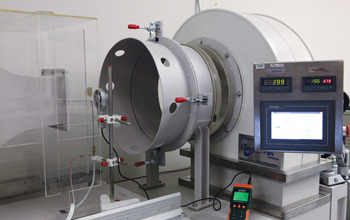
Our cutting-edge wind tunnel delivers extremely low measurement uncertainties. For top-notch calibrations at affordable prices, count on InnoCal.

Experienced technicians in InnoCal’s air velocity lab use advanced wind tunnel technology to provide some of the industry’s best measurements. And, because we know how critical your wind speed and air velocity equipment is to your work, we turn around your anemometers quickly. Expect them to arrive in working order, with a calibration certificate that will pass any audit or customer inspection. Plus, we can provide a NIST-traceable calibration no matter what brand you prefer.
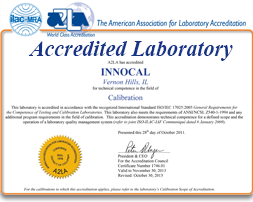
Our ISO17025 accredited services, audited by A2LA, are proof of InnoCal’s high technical competency in vane and hot-wire anemometer and manometer calibrations.
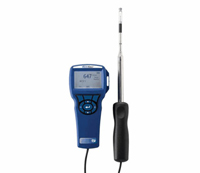
Hot Wire
Anemometers
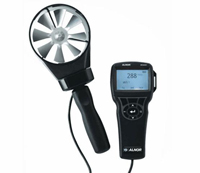
Vane Anemometers

Weather Stations
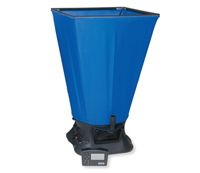
Capture Hoods
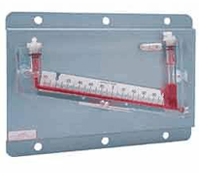
Manometers
Measurement Range: 1 to 50 m/s (200 to 9850 feet per minute)
Best Uncertainty: 1 to 13 m/s: 0.009 m/s + 0.55% of reading; 13 to 50 m/s: 0.003 m/s + 0.59% of reading
Measurement Type: Ultra-stable, closed-loop wind tunnel and high-accuracy pitot tubes
|
NIST-Traceable Calibrations on the Top Brands! |
|
|
TSI Alnor |
Davis |
|
Extech |
Dwyer |
|
Kanomax |
Amprobe |
|
Pacer |
Testo |
|
Milltronics |
Fieldpiece |
|
Omega |
TPI |